
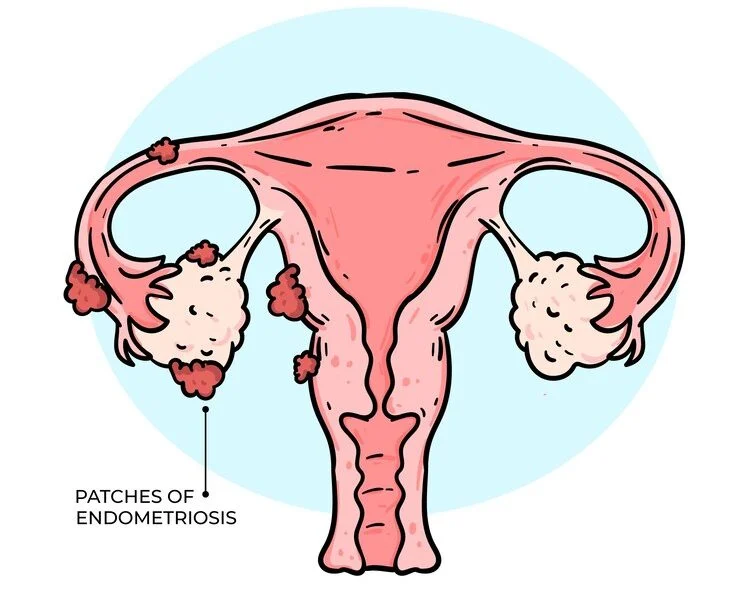
Understanding Endometriosis (Part 2)
Stages of Endometriosis:
Endometriosis can be classified into stage 1 to 4 by the 1996 Scale of American society of Reproductive medicines (ASRM). A point system assesses lesions and adhesions to the pelvic organs. Staging assesses physical disease only, not the level of the pain or infertility.
- Stage 1(minimal)
Findings here are restricted to only superficial lesions and possibly adhesions.
- Stage 2(mild)
In addition to the stage one findings, some deep lesions are present in the cul-de- sac.
- Stage 3(moderate)
In addition to the findings in stage two, there is the presence of endometriomas on the ovary and more adhesions.
- Stage 4(severe)
In addition to the findings in stage 3, there appears large endometriomas, extensive adhesions may also be found beyond the uterus, and large ovarian cysts are common.
Markers
It has been postulated that a future diagnostic tool for endometriosis will have to consist of a panel of several specific and sensitive biomarkers, including both substance concentrations as well as genetic predispositions. A 2016 review of endometrial biomarkers for diagnosing endometriosis was unable to draw conclusions courtesy of the low quality of the evidence.
In 2010, essentially all the proposed biomarkers for endometriosis were of unclear medical use, although some seem to have a promising future. For example, MicroRNA has the potential to be of use in diagnostic and therapeutic decisions.
Note
Pain medications and management techniques can help one live with endometriosis. Hormonal therapy can also slow down the growth of the disease and help reduce the pain. However, all these don’t cure endometriosis.
On the other hand, untreated endometriosis can cause unbearable pain, excess menstrual bleeding, digestive distress, and can also affect a person’s fertility when endometrial tissue grows outside of the uterus,
Diagnosis:
Definitive diagnosis of endometriosis requires surgical visualization through laparoscopic surgery. Criteria used to establish a diagnosis are pelvic pains, infertility, surgical assessment and MRI. An ultrasound can identify large clumps of tissue as potential endometriosis lesions and ovarian cysts but is not that effective especially in cases with smaller, superficial lesions.
Histopathology
Histopathological diagnosis should involve at least two of these three criteria:
-Endometrial type stroma
-Endometrial epithelium with glands
-Evidence of chronic hemorrhage, mainly hemosiderin deposits
Immunohistochemistry has been found to be useful in diagnosing endometriosis as stromal cells have a peculiar surface antigen, CD 10. This allows the pathologist to go straight to the staining area and confirm the presence of stromal cells and to some level identification of glandular tissue that was missed during routine procedures.
Pain Quantification
Visual Analogue Scale(VAS) and Numerical Rating Scale(NRS) are the best adapted pain scales for pain measurement in endometriosis. For research purposes and when in need of detailed measurement in clinical practice, VAS or NRS combined with Clinical Global Impression(CGI) and a quality of life scale, are employed.
Prevention:
The use of combined oral contraceptives can reduce the risk of endometriosis. Other measures to be taken include avoidance of alcohol and caffeine. Basically, there’s little knowledge at disposal on preventing endometriosis.
Management
There’s no cure for endometriosis but there are two types of interventions to help manage the condition; treatment of pain, and treatment of endometriosis associated infertility. In many cases, menopause helps the situation when it comes to controlling the pain associated with endometriosis. In reproductive years, it’s usually managed. The goal here is to provide pain relief, restore progression of the process and restore or preserve fertility where needed and possible. In younger individuals, some surgical treatments may be used to attempt to remove endometriotic tissue and preserve the ovaries without damaging normal tissues.
Pharmacotherapy for pain management can be initiated based on the presence of symptoms and examination and ultrasound findings that rule out other potential causes.
Generally, diagnosis of endometriosis is confirmed during surgery at which time removal of endometrial tissue may be performed. Other steps depend on the circumstances. For example, someone without infertility can manage symptoms with pain medication and hormonal medication that suppresses the natural cycle while an infertile individual may be treated expectantly after surgery, with fertility medication, or with in vitro fertilization (IVF).
A 2020 Cochrane systematic review found out that for all types of endometrioses, it’s uncertain whether laparoscopic surgery improves pain compared to diagnostics laparoscopy.
Surgery
Strong evidence by experts support performance of surgery laparoscopically (through keyhole surgery) rather than open surgery. Treatment consists of the ablation or excision of the endometriosis, electrocoagulation, lysis of adhesions, resection of endometriosis, and restoration of normal pelvic anatomy as much as possible. When laparoscopic is used, small instruments are inserted through the incisions to remove the endometriosis tissues and adhesions. Because the incisions are small, they leave very small scars on the skin which facilitates quick recovery and also reduces risk of adhesions.
Experts believe that excision is the ideal surgical method to treat endometriosis. A 2017 literature review found that excision improved some outcomes over ablation.
In the US, some specialists do not accept health insurance because companies don’t reimburse the higher costs if the procedure over ablation.
As for deep endometriosis, a segmental resection or shaving of nodules is effective but is associated with an increased rate of complications of which 4.6% are major complications.
Historically, a hysterectomy (removal of the uterus) could work for individuals who did not wish to conceive later. But it’s more beneficial if the uterus is affected by adenomyosis. However, this should only be done in combination with removal of endometriosis by excision. If endometriosis is not removed at the time of hysterectomy, pain may persist.
Presacral neurectomy may be performed where the nerves to the uterus are cut. But it’s frowned upon by specialists due to the high incidences of associated complications like presacral hematoma and irreversible problems with urination and constipation.
Recurrence
The rate of recurrence is estimated at 40-50 for adults over a 5-year period. The rate of recurrence has been shown to increase with time from surgery and is not associated with the stage of the disease, initial site, surgical method uses, or post-surgical treatment.
The underlying process that causes endometriosis may not cease after a medical or surgical intervention. Dysmenorrhea recurs at a rate of 30% within a year after laparoscopic surgery. Resurgence of lesions tend to appear at the same location they were if they were not completely removed during surgery. Study shows that laser ablation resulted in higher and earlier recurrence rates compared with endometrioma cystectomy, and recurrence after repetitive laparoscopy was similar to that after first surgery.
Endometriosis has a 10% recurrence rate after hysterectomy and bilateral salpingo(oophorectomy).
After conservative surgery, recurrence is estimated at 21.5% at 2 years and 40-50% at 5 years.
Recurrence rate for DIE after surgery is less than 1%.
Risks and Safeties of Pelvic Surgery
These depend on the type of the lesion that has undergone surgery. 55-100% of individuals develop adhesions following pelvic surgery, which can lead to infertility, chronic abdominal and pelvic pains, and difficult reoperative surgery.
Trehan’s temporary ovarian suspension, a technique in which the ovaries are suspended for a week after surgery, may be used to reduce the risk of adhesions at endometriosis surgery. Removal of cysts
on the ovary without removing the ovary is a preferred and safe procedure.
Hormonal medications
Hormonal Birth Control Therapy
These reduce the menstrual pain and recurrence rate for endometriosis after conservative surgery. A 2018 Cochrane systematic review found that there’s no enough evidence to make a judgment on the effectiveness of the combined oral contraceptive pill compared with placebo or other medical treatment for managing pain associated with endometriosis.
Progestogens
These counteract estrogen hence inhibit the growth of endometrium. There’s tentative evidence based on a prospective study that vaginal danazol reduces pain in those affected by DIE, and tentative evidence based on cohort studies suggests that dienogest may help patients with DIE reduce pain. Both danazol and gestrinone are suppressive steroids with some androgenic activity. Their core function is to inhibit the growth of endometriosis, but due to the side effects that come with using them, such as excessive hair growth and voice changes, their preference and use has grown down over the years.
Gonadotropin-Releasing Hormone(GnRH)
These are modulators and they include GnRH agonists like leuprorelin and GnRH antagonists like elagolix. They are thought to work by decreasing estrogen levels . A 2010 Cochrane review found out that GnRH modulators were more effective for pain relief in Endometriosis than placebo but not as effective as danazol or intrauterine progesterone. It was also found out that GnRH has more side effects than danazol.
Aromatase Inhibitors
These medications block the formation of estrogen and have lately become of interest to researchers treating endometriosis. Examples of aromatase Inhibitors are anastrozole and letrozole. When used in combination with gestagens or oral contraceptives, they can control pain and improve quality of life. However, consideration should be there before using them because they can induce functional cysts .
Dosages, treatment length, mode of administration, and appropriate add-back therapy when using this medication are still under investigation.
Progesterone receptor modulators like mifepristone and gastronome have the potential to manage pain caused by endometriosis
Other medicines
Melatonin
This can reduce pain related to endometriosis.
Opioids: Morphine Sulphate Tablets
These, and other opioid painkillers work by mimicking the action of naturally occurring pain reducing chemicals called endorphins. They can be used alone or in combination to provide essential pain control.
Chinese Herbal Medicine
They are reported to have comfortable benefits to gestrinone and danazol in patients who had laparoscopic surgery though better quality research is needed to ascertain their value.
Serrapeptase
This is a digestive enzyme found in the intestines of silkworms and is widely used in Japan and Europe as an anti- inflammatory treatment . It can be used to reduce inflammation although more research is needed to help get the best out of it.
Angiogenesis Inhibitors
These lack clinical evidence of efficacy in endometriosis therapy. Under experimental in vitro and in vivo conditions, compounds that have been shown to exert inhibitory effects on endometriotic lesions include growth factor inhibitors, stations, dopamine agonists, progestins, among others. However, many of these agents are associated with undesirable side effects and therefore more research is needed to avert more crises when treating endometriosis.
An ideal therapy should diminish inflammation and the underlying symptoms without being a contraceptive.
Pentoxifylline
This is an immunomodulating agent and has been theorized to reduce pain as well as improve pregnancy rates in endometriosis individuals. However, there’s no enough evidence to support it and current American Congress of Obstetricians and Gynecologists (ACOG) guidelining does not include immunomodulators in standard treatment protocols
NSAIDs
These are anti-inflammatory medicines and are commonly used despite unproven efficiency and some adverse effects.
Neuromodulators
These include gabapentin which did not prove to be superior to placebo in managing pain caused by endometriosis.
The overall effectiveness of manual physical therapy to treat endometriosis has not been identified.
Comparisons and Interventions
A 2021 meta-analysis found that GnRH analogues and combined contraceptives worked best for reducing menstrual and non- menstrual pelvic pains as well as pain associated with dyspareunia. A 2018 Swedish systematic review found a very large number of studies but a general lack of evidence for most treatments. Cohort studies indicate that surgery is effective in decreasing pain.
Most complications occurred in cases of low intestinal anastomosis, while risk of fistula occurred in cases of combined abdominal or vaginal surgery, while vaginal tract problems were common on intestinal surgery. The evidence was found to be insufficient with regard to surgical intervention.
The advantages of physical therapy techniques are decreased cost, absence of major side effects, no interference with fertility, and near universal increase of sexual function.
The disadvantages are no large or long-term studies of its use for treating pain or infertility related endometriosis.
Treatment of infertility
Surgery is more effective than medical intervention for addressing infertility related to endometriosis. Surgery attempts to remove endometrium like tissues and preserve the ovaries without damaging normal tissues. Receiving hormonal suppression therapy might be positive regarding endometriosis recurrence and pregnancy. In Vitro Fertilization (IVF) procedures help improve fertility in endometriosis cases. During fertility treatment, the ultralong pretreatment with GnRH agonist has a higher chance of resulting in pregnancy for endometriosis patients than the short treatment.
Research
Preliminary research on mouse models showed that monoclonal antibodies as well as inhibitors of MyD88 downstream signaling pathway can reduce lesion volume, hence clinical trials are being done on using a monoclonal antibody directed against IL-33, and using anakinra,an IL- receptor antagonist.
When to see a doctor
In case you feel you have symptoms, you should see a member of your health care team. You may be able to take charge of the symptoms if:
-Your care team diagnoses the disease sooner than later
-Your learn as much as you can about it
-You get treatment from a team of health care professionals from different medical fields, if needed.

All Categories
Recent Posts

Understanding Endometriosis (Part 2)